
Your Physiotherapist’s Guide to Returning to Sport After Injury
Return-to-sport recovery in physiotherapy follows three staged phases: Protect & Restore, Rebuild & Load, and Return & Perform. Skipping or rushing any stage is the primary cause of reinjury. A physiotherapist-guided program at Greater Western Health in Hawkesbury matches each stage to your specific injury, sport, and readiness, not a generic timeline. If you’re currently sidelined and wondering how to get back safely, this guide covers every stage in detail.
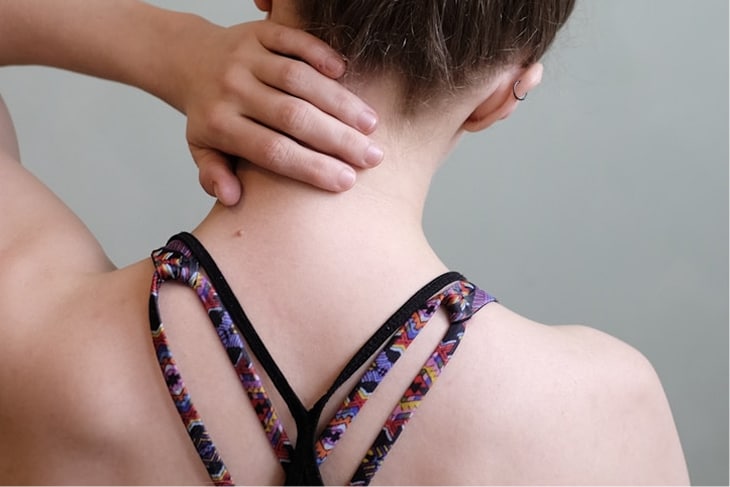
Feeling stuck right now?
You know your body. You know what fit feels like. Right now, you feel stuck. Whether it’s a knee reconstruction, a torn hamstring, a shoulder that gave way at the wrong moment, or an ankle that’s been almost right for three months, being on the sideline when you want to be playing is its own kind of pain.
The temptation to push back before you’re ready is real. We see it every week at Greater Western Health in Hawkesbury. Patients who feel 80% and convince themselves that’s close enough. Athletes who skip the middle stages of rehab because they feel fine. And then four weeks later, they’re back on the treatment table.
Here’s what our physiotherapy team has learned from helping the Hawkesbury region’s athletes, weekend warriors, and active locals get back to full sport: the return is not a moment. It’s a process. And the three stages between injury and full return are where your comeback is actually built.
What Happens to Your Body After a Sports Injury
Most athletes focus entirely on pain. Clinically, our physiotherapists are assessing something much wider, and what they find in the first few days often determines the entire recovery trajectory.
In a first appointment following a significant sports injury, we’re assessing: how the injury happened, visible signs of significant tissue damage, swelling and joint integrity, strength and movement deficits, neurological signs, weight-bearing tolerance, and whether imaging or specialist referral is needed. Pain levels are one data point. They’re rarely the most important one.


The First 48 to 72 Hours: What the Body Is Actually Doing
In the immediate aftermath of tissue damage, the body launches an inflammatory and protective response. Blood flow to the injured area increases. Inflammatory cells arrive to begin repair. Muscles tighten protectively around the structure. The nervous system shifts into a guarding state.
This is why swelling, heat, stiffness, and pain often worsen over the first 48 hours. Not because the injury is getting worse, but because healing has started. The way an injury is managed early on can influence pain levels, swelling, mobility, and overall recovery timelines. Getting appropriate advice early can make a major difference and may prevent smaller injuries from becoming prolonged issues.
Why ‘It Doesn’t Feel That Bad’ Is the Most Dangerous Statement in Sports
Adrenaline and the body’s acute stress response can temporarily mask pain and allow athletes to keep functioning. Inflammation and swelling take time to fully develop. That’s why athletes sometimes continue playing after a significant injury, then wake up the next morning significantly worse.
We’re always cautious of injuries that seem deceptively mild early on. Some more serious injuries don’t fully reveal themselves until inflammation develops, and by then, the athlete has often already made decisions that cost them weeks.
Pain Subsiding Is Not the Same as Tissue Healing
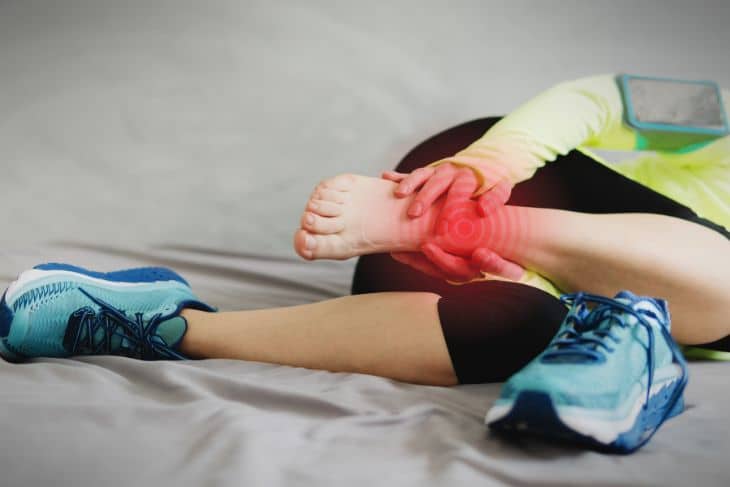
This distinction matters more than almost anything else in sports recovery. Pain is a signal, not a precise measure of structural status. Tissue healing runs on a completely separate, longer timeline. An athlete whose pain resolves at week three may still have tissue that’s only partially healed and significantly below functional strength.
Acting on the pain signal alone, without physiotherapy assessment to confirm tissue readiness, is the mechanism behind most premature return-to-sport injuries.
What to do in the first 24 hours
- Protect the injured area and avoid testing it repeatedly.
- Apply appropriate load management and relative rest, but not complete inactivity.
- Manage swelling with appropriate first-aid measures.
- Maintain movement where tolerated without aggravation.
- Seek physiotherapy assessment if pain, instability or swelling is significant.
- Do not push through. Adrenaline is not clearance.
The 3 Critical Stages of Return-to-Sport Rehab
Most rehab programs follow a staged progression. Timelines vary enormously by injury type and athlete. What doesn’t vary is the logic: you only move to the next stage when your body demonstrates it can tolerate the current one, without increased pain, swelling, instability or loss of function. Good rehab isn’t about waiting a certain number of weeks. It’s about earning progression through objective improvement.
Stage 1: Protect & Restore
Goals
- Reduce pain and acute swelling
- Restore baseline range of motion
- Initiate gentle, controlled loading
- Prevent compensatory movement patterns from becoming habitual
What physio looks like
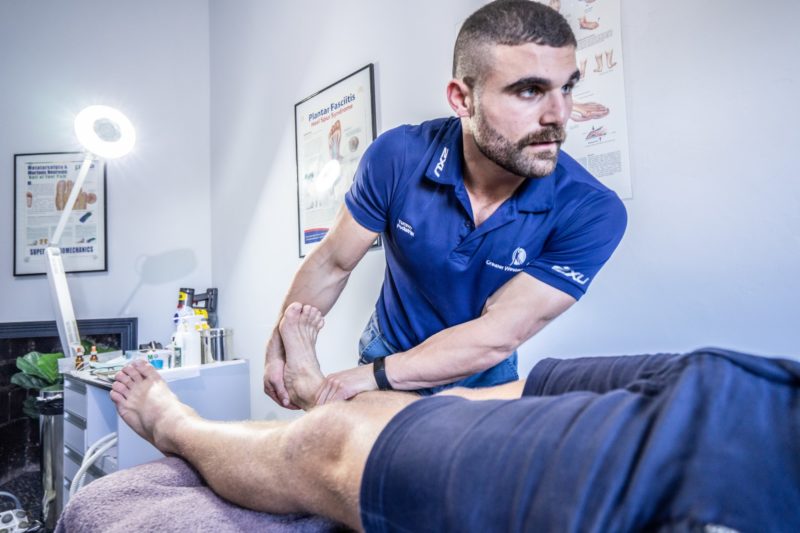
- Hands-on manual therapy to manage tissue response
- Pain and swelling management guidance
- Initial exercise prescription, controlled, specific, low-load
- Education on what you should and shouldn’t be doing at home
- Referral for imaging if structural integrity is in question
Watch out for
- Aggravating healing tissue before it has capacity
- Too little movement, allowing stiffness and muscle deconditioning to set in
- Treating pain resolution as the milestone to return, it isn’t
Stage 2: Rebuild & Load
Goals
- Restore strength close to pre-injury levels
- Develop neuromuscular control and movement quality
- Rebuild sport-specific movement patterns
- Address psychological readiness alongside physical progress
What physio looks like
- Progressive resistance training: bodyweight through to loaded exercise
- Single-leg stability and balance work
- Neuromuscular retraining: timing, coordination, joint awareness
- Running and agility introduction (injury-dependent)
- Regular reassessment against objective strength and movement benchmarks
Watch out for
- Feeling ‘fine’ and assuming it means readiness for return
- Skipping neuromuscular work because it feels easy or unimpressive
- Ignoring psychological hesitation. The fear of movement actively affects outcomes
Stage 3: Return & Perform
Goals
- Sport-specific conditioning under realistic load and speed
- Agility, reaction, and change-of-direction work
- Confidence under pressure (contact, competition pace, unpredictable demands)
- Full clearance based on objective return-to-play criteria
What physio looks like
- Sport-specific drills at game intensity
- Hop testing, strength symmetry testing, agility and balance measures
- Graduated return to modified, then full training
- Ongoing monitoring for load spikes and early warning signs
Watch out for
- Confusing ‘cleared by physio’ with ‘back to pre-injury performance’, they’re different milestones
- Dropping maintenance physio immediately after clearance. Reinjury rates rise sharply without it
- Re-entering the competition before completing the full phase
Competitive Athlete vs. Weekend Warrior: Does the Approach Differ?
The principles are identical. The end targets are different, and that matters enormously for goal-setting and motivation throughout the process.
- A competitive rugby league or netball player at a Hawkesbury club needs high-speed power production, explosive change-of-direction ability, contact tolerance, and repeat-sprint capacity.
- A recreational trail runner or touch football player in Western Sydney simply needs to run comfortably, play a social match without compensation, and stay active for the next decade.
Both goals are legitimate. Both deserve a plan built around them.

How Long Does Recovery Actually Take?
The honest clinical answer: it depends. Recovery timelines vary based on injury type and severity, previous injury history, general health and fitness, sleep and stress habits, work and sporting demands, and how consistently the rehab program is followed.
What’s consistent across the research is this: pain settles before tissue is ready, tissue heals before performance is restored, and trying to compress all three timelines into one is the mechanism behind most chronic sports injuries.
Injury Type | Typical Return-to-Sport Timeline | Key Variable |
Mild muscle strain / sprain | 2–6 weeks | Compliance with load guidelines |
Moderate soft tissue injury | 6–12 weeks | Sleep, nutrition, no re-aggravation |
Hamstring grade II–III | 8–16 weeks | Neuromuscular retraining completion |
Ankle ligament reconstruction | 3–6 months | Proprioception and strength symmetry |
Shoulder (rotator cuff / labrum) | 4–9 months | Post-surgical protocol adherence |
ACL reconstruction | 9–12+ months | Strength symmetry, psychological readiness |
What Speeds Recovery Up and What the Evidence Actually Says
These are the factors within your control that consistently show up in the literature as recovery accelerators:
- Consistency with rehab: small sessions done regularly outperform sporadic intensive efforts
- Sleep quality: This is where physical and neurological repair predominantly occurs; poor sleep directly impairs pain sensitivity, muscle recovery, and inflammation regulation
- Nutrition and hydration: healing tissue requires energy and adequate protein; you cannot build new tissue on a calorie deficit or dehydration
- Appropriate load management: staying within the adaptation window, not below it and not above it
- Stress management: Psychological stress elevates cortisol and negatively affects tissue repair; this is not abstract, it is physiological
- No repeated aggravation: every significant flare-up resets a portion of the healing timeline
Can You Rush It? Here's What the Research Says:
You can rush it, but it almost always makes the total recovery timeline longer, not shorter. When tissues are repeatedly overloaded before they’ve adequately adapted, the body cycles through irritation and inflammation without progressing.

Your Personalised Return-to-Sport Plan at Greater Western Health
No two athletes present identically, even with the same injury. A 19-year-old rugby league halfback and a 44-year-old trail runner with the same ACL reconstruction have different demands, different histories, and different definitions of a successful outcome. That’s why every return-to-sport plan at GWH starts with a comprehensive first assessment, not a template.
What Happens at Your First Physio Appointment
In that first hour, we build a complete clinical picture:
- How the injury occurred and the mechanism involved
- Current pain levels, symptoms, swelling, and movement limitations
- Strength, movement quality and functional assessment
- Training load, sport demands, playing position, and competition timelines
- Previous injury history and how it affects the current presentation
- Whether imaging or specialist referral is required
Patients leave with clarity on what the injury likely involves, what they should and shouldn’t be doing right now, the expected direction of recovery, an early rehab plan, and the next milestone to work toward. For most athletes, arriving at the first appointment is as valuable as the hands-on treatment itself.
How We Build Your Personal Recovery Plan
After assessment, we build staged milestones together, specific to the athlete’s real-world demands, like restoring strength and range of motion, running comfortably under controlled conditions, or returning to competition. Here’s who we work with across our Richmond and Kurrajong clinics:
Athlete Type | Typical Presentation | End Goal |
Competitive (rugby league, netball, AFL) | ACL, hamstring, shoulder, ankle | Full training load + competition return |
Weekend warrior (touch footy, trail running, CrossFit) | Ankle sprains, soft tissue, overuse | Play social sport pain-free |
Junior athlete (school sport) | Growth-related, acute trauma | Safe return, long-term development |
Over-40s / active lifestyle | Chronic joint issues, post-surgical, cycling, running | Stay active, manage load, prevent falls |
Tradie / manual worker (Hawkesbury) | Work-related MSK, repetitive load | Return to full work duties safely |
Ready to Start Your Return-to-Sport Assessment?
Training for something big? Our expert Physiotherapy team will help you get back on track. Book your first appointment at our Richmond or Kurrajong clinic, and we’ll build a personalised return-to-sport plan that actually reflects what you’re trying to get back to. We’re here to help you move better and stay that way.
WE ARE PROUD PARTNERS OF